We need to talk about Hamas…
But Hamas is “proscribed” and banned as a terrorist organisation. It is a criminal offence under the Terrorism
Act 2000, with a penalty of up to 14 years in prison, to:
- Invite support for a proscribed organisation (the support invited need not be material support, such as the provision of money or other property, and can also include moral support or approval) (section 12(1) of the Act)
- Express an opinion or belief that is supportive of a proscribed organisation, reckless as to whether a person to whom the expression is directed will be encouraged to support a proscribed organisation (section 12(1A) of the Act).
So how can Hamas be discussed without breaking the law? A clause in the legislation allows the ban to be challenged. So discussing the rights and wrongs of the ban is allowed. This article does not express support for Hamas, nor even challenge the ban; it provides the background for a discussion.
Did the elections which Hamas won in 2006 give them legitimacy and did they lose it?
In 2006 Hamas won elections across Gaza and the West Bank, international observers certified them as free and fair. Hamas opposed the Palestinian Authority (PA) which had been given some powers over the West Bank, East Jerusalem and Gaza in the Oslo Accords of 1993.
The PA is despised by many Palestinians because it has served Israel’s occupation with brutal repression of its own people. The US and the European Union financed the PA. Much of the money was used to fund security organisations. Some found its way into the pockets of officials. Meanwhile, Hamas provided health care, education and other services. Hamas were not seen as corrupt.
‘Anyone who wants to thwart the establishment of a Palestinian state has to support bolstering Hamas and transferring money to Hamas…
This is part of our strategy – to isolate the Palestinians in Gaza from the Palestinians in the West Bank’
Israeli Prime Minister Benjamin Netanyahu announced the divide-and-rule policy to play off Hamas and the PA against each other at the Likud Party conference in 2019
Source: Haaretz on X
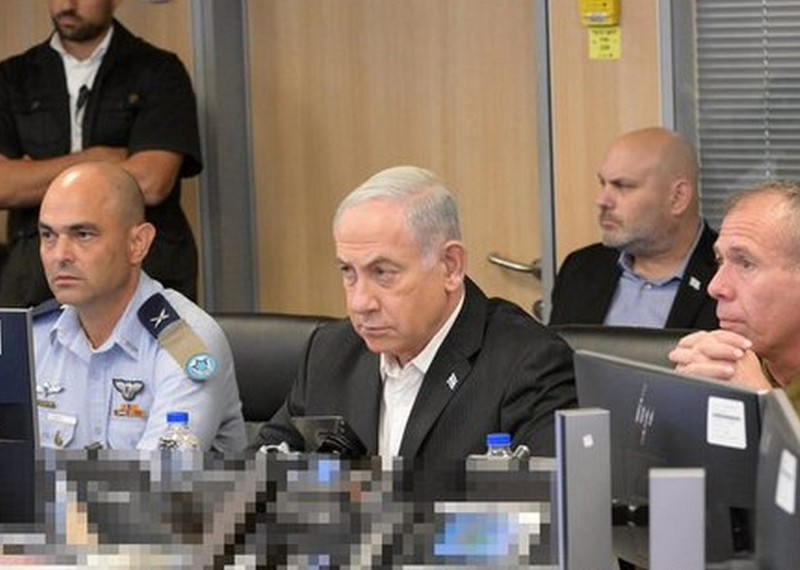
Divide and Conquer
A gang responsible for looting aid deliveries to Gaza wants to be its next government, says Sky News. The channel’s investigative team has been tracking the Popular Forces gang.
Members collaborated with the notorious Gaza Humanitarian Foundation which was supposed to deliver aid to Gaza during the Israeli-engineered famine. Hundreds were shot dead as they queued for food, but the gang lived in luxury off diverted aid. Israel allowed Popular Forces to run a cigarette-smuggling racket.
“Experts say that Israel’s support for such groups is intended to ‘divide and conquer’ and to ensure that it maintains a level of control in Gaza, whatever its future” the report concluded.
How is Hamas viewed differently by Israel, the West and by Palestinians?
For Israel and most Western media, the breaking out of Gaza by Hamas on October 7 2023 began everything. It was a crime against humanity. But there is a context:
The history
In 1948, in the establishment of Israel, the populations of 19 Palestinian villages were killed, and threequarters of a million were expelled. In 1967, when Israel took the West Bank, it expelled another one third of a million and set up a brutal military rule. Mass killings, like those in Sabra and the Shatila refugee camp in Beirut in 1982, and others, took place.
Details of such massacres, and the intensification of violence by Israeli settlers in the West Bank, were largely unreported by western media, which focused on Hamas’ brutality – its suicide bombing campaign of the 90s
and 2000s was notorious.
Israel bombed Gaza in 2009, 2012, 2014 and 2021, killing thousands of civilians and destroying hospitals and essential services. Israel has blockaded Gaza for 17 years, restricting food, water, medical equipment and patients leaving for treatment. Israeli forces called this “putting Gazans on a diet”. It was largely unreported in the West.
Many Palestinians see Hamas in the same light as Nelson Mandela’s African National Congress, with its Umkhonto we Sizwe (MK) armed wing, representing them against oppression, or like the leaders of violent rebellions by enslaved people.
Has Hamas changed over the years?
Hamas’ first charter sought the replacement of Israel with an Islamic state. Its second of 2017 was a complete rewrite. It did not recognise “the Zionist state”, but it called for a Palestinian state to the east of the 1967 border. Israel and the media never quote from this later document.
How do the different sides view negotiations as a way to solving the crisis?
Over 40 years Hamas has made ceasefire deals with Israel: it held to them, Israel did not. It is prepared to negotiate, but Israel has an unusual take on diplomacy. Hamas leader Ismail Haniyeh, the chief ceasefire negotiator last summer, was assassinated by Israel.
Negotiations were taking place in Qatar last September. Israel tried to kill the whole Hamas team by bombing the building. One war crime does not justify another. But in history repression has generated rebellions.


